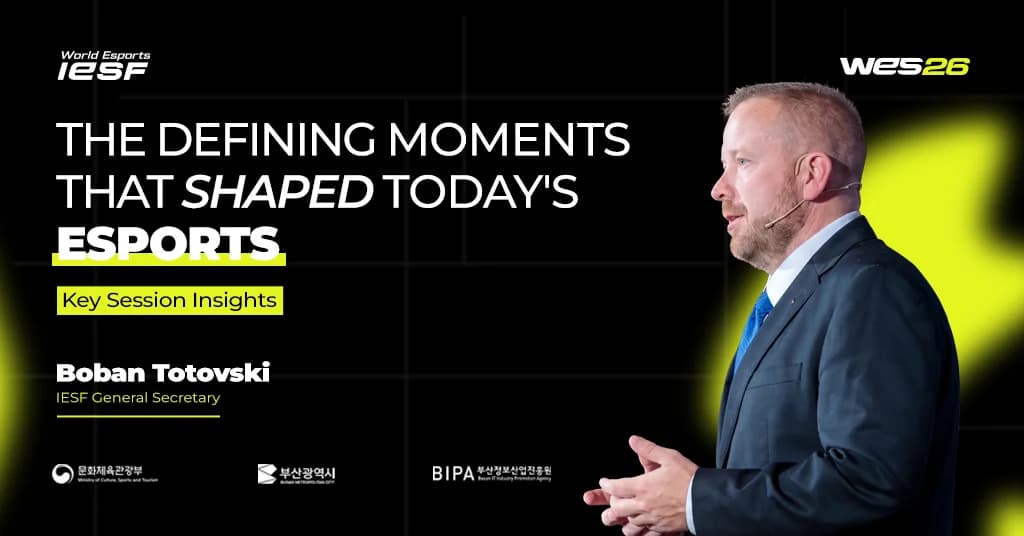
Esports has evolved dramatically over the past 54 years, growing from early competitive gaming events into a global industry. What began as players challenging one another gradually developed into an organised form of competition, creating the need for shared rules, standards, and fair conditions for all participants.
South Korea played a pioneering role in this evolution, helping establish standards for refereeing, training facilities, and organised competition. As esports expanded internationally, broadcasting platforms brought tournaments to wider audiences, while international events gave players the opportunity to represent their nations. The inclusion of esports as a medal event at the Asian Games marked another significant milestone in its recognition.
Building a Stronger Esports Ecosystem
As the industry continues to grow, federations play an important role in developing competitive structures, supporting national communities, and ensuring that players are represented. The growth of ISF championships, from early events involving nine countries to competitions attracting more than 100 nations, reflects the progress made in establishing esports on the global stage.
However, development goes beyond participation numbers. Protecting players and ensuring fair competition remain essential priorities. This includes making sure promised prize money reaches participants and addressing the need for stronger legal protections for professional players. Giving athletes a voice in decision-making is equally important, helping ensure that their wellbeing and safety remain central to the future of esports.
International competitions also offer opportunities beyond the game itself, allowing young people to build friendships, exchange cultures, and develop a stronger sense of community.
The Next Mission
Esports has come a long way, but its development is far from complete. Continued progress will depend on stronger cooperation, better protection for athletes, and opportunities for more nations to participate in organised competition.
At its heart, esports remains driven by the people who play, support, and develop it. The next challenge is to build on the milestones of the past and create a stronger, fairer, and more sustainable future for the generations to come.
Watch the full panel HERE.