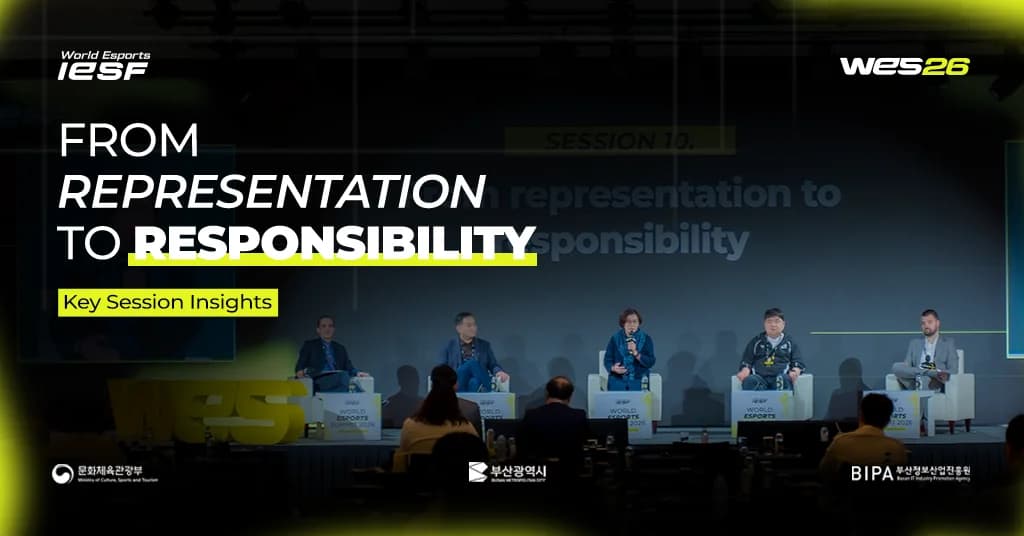
As esports continues to grow internationally, national federations are taking on responsibilities that go far beyond selecting teams and representing their countries. Supporting athletes, connecting communities and creating opportunities are becoming essential to building a stronger and more sustainable esports ecosystem.
At WES26, the session “From Representation to Responsibility” explored how federations can adapt to the evolving industry and turn their national representation into meaningful, long-term impact.
Building Trust Through Collaboration
A strong esports ecosystem starts with trust. National federations need to work closely with governments, communities, tournament organizers and other stakeholders to strengthen the position of esports within their countries. By creating these connections, they can help the industry gain recognition and ensure that the needs of its communities are heard.
Federations also serve as important meeting points for different parts of the ecosystem. Connecting athletes, publishers, academia and industry creates opportunities to exchange knowledge, develop partnerships and work towards shared goals. While every country has its own challenges and resources, collaboration remains essential to helping esports progress.
Supporting Athletes Beyond Competition
The responsibility of a federation does not end when a national team is selected or a competition begins. Athletes need support that allows them to develop both as competitors and as individuals. Physical and mental preparation, education, safeguarding and opportunities beyond their playing careers all contribute to a healthier esports environment.
Grassroots development is equally important. Amateur competitions provide aspiring players with opportunities to improve, gain experience and potentially progress towards professional competition. Investing in these pathways helps strengthen the foundations of esports and ensures that the next generation has opportunities to become part of the ecosystem.
Building an Ecosystem That Lasts
Another key takeaway from the discussion was the importance of looking beyond immediate results. Medals and international achievements can bring visibility, but sustainable growth requires a broader approach. Partnerships with publishers and sponsors, domestic competitions and initiatives that engage local communities can all contribute to long-term development.
Rather than focusing exclusively on national team performance, federations can create systems that continue to support esports well into the future. This means developing opportunities for new talent, building stronger audiences and ensuring that the ecosystem remains active and relevant for generations to come.
Ultimately, there is no single model for a successful national esports federation. Each country has its own history, opportunities and challenges, but the responsibility remains shared: to support athletes, strengthen communities and create the conditions for esports to thrive.
The future of esports is not just about representing a nation. It is about building something that lasts.
Watch the full panel HERE.