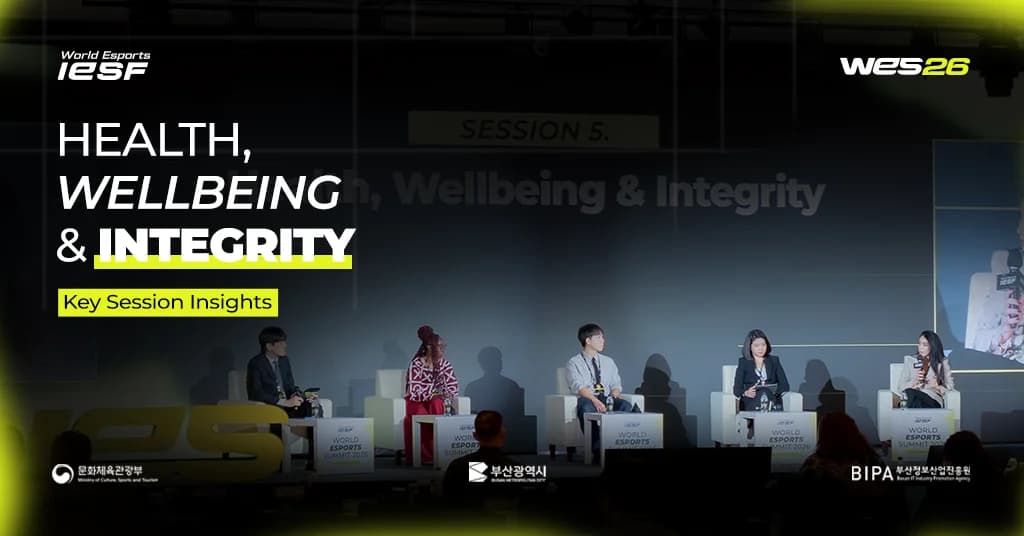
As esports continues to grow and professionalize, success must be measured by more than competitive results. Player well-being, safety and integrity are essential to building a sustainable future for the industry, ensuring athletes can perform at their best without compromising their physical or mental health.
Well-being as the Foundation of Performance
High-pressure competition, constant public scrutiny and online harassment can take a significant toll on athletes. Yet, well-being is often treated separately from performance, addressed only when a problem arises. A more sustainable approach recognizes that the two are closely connected and that supporting athletes is an investment in their long-term development.
Psychological support, open communication, constructive feedback and regular check-ins can help players manage pressure and maintain a healthier relationship with competition. Rather than waiting for a crisis, teams and organizations should establish support systems from the beginning, making well-being an integral part of their culture.
Creating safer environments also requires more than policies and codes of conduct. Athletes need clear procedures for reporting harassment, sexism, stalking and other harmful behavior, alongside confidence that their concerns will be taken seriously. Reporting channels must be accessible, confidentiality must be respected, and those responsible for handling complaints must be equipped to respond appropriately.
Shared Responsibility, Meaningful Action
Responsibility extends across the entire esports ecosystem. Tournament organizers, publishers, teams and platforms all have a role to play in protecting participants, both online and offline. Effective cooperation is particularly important when incidents cross different environments, requiring clear accountability and practical solutions rather than policies that exist only on paper.
Giving athletes a voice is equally important. Players should be included in decisions that affect their careers and have meaningful opportunities to communicate their needs and experiences. Regular check-ins, accessible communication channels and clear reporting procedures can help bridge the gap between organizational policies and athletes' everyday realities.
Access to professional support remains another important consideration. Not every team or organization has the resources to employ psychologists or retain legal specialists, making collaboration with federations and other industry bodies essential. Connecting athletes and teams with qualified professionals can help ensure that support is not limited to those with the largest budgets.
The session also highlighted the importance of education in protecting athlete health and competitive integrity. Anti-doping awareness, clear rules and a strong understanding of fair play are fundamental to a trustworthy competitive environment. Providing athletes with the knowledge and resources to make informed decisions helps strengthen both individual well-being and the integrity of competition.
Ultimately, building a healthier esports ecosystem requires a collective commitment to prevention, accountability and long-term investment in people. Policies must translate into meaningful action, athletes must feel safe speaking up, and support systems must remain accessible throughout their careers.
As esports continues to evolve, its future will depend not only on the quality of competition or the size of its audiences, but also on how effectively it protects the people who make it possible.
Watch the full panel HERE.