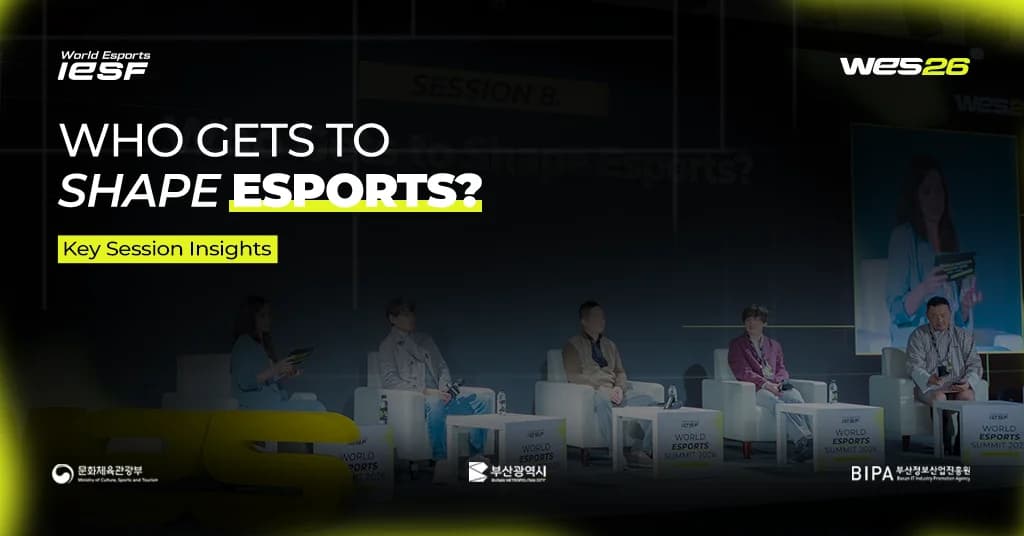
Esports continues to evolve into a global ecosystem that brings together publishers, federations, players, tournament organizers, creators and communities. As the industry grows and becomes more established, questions around influence, responsibility and decision-making become increasingly important.
While stakeholders may share the ambition of seeing esports succeed, they can have different priorities and perspectives on what that success should look like. Finding common ground is essential to building an ecosystem that can grow sustainably and create opportunities across different markets.
Collaboration Is Key to Esports Growth
Publishers, federations, teams, tournament organizers, players and communities all contribute to the development of esports. Each plays a different role, from developing games and organizing competitions to supporting national representation and engaging audiences.
The industry's future depends on how these stakeholders work together. No single organization can address every challenge or drive sustainable growth alone. Open communication and flexibility are essential when commercial interests, tournament schedules and local requirements overlap.
Global Strategies, Local Realities
Esports may operate on a global scale, but every market has its own needs, resources and challenges. Economic conditions, infrastructure, community interests and institutional structures can vary significantly between regions.
Global strategies must therefore leave room for local expertise and adaptation. Combining international frameworks with an understanding of regional realities can help create competitions and development opportunities that better serve local communities. Stronger connections between established organizations and emerging federations can also help expand participation and support the growth of esports in new markets.
Building an Inclusive Esports Ecosystem
Streamers and content creators have become an important part of esports, helping competitions reach new audiences and making broadcasts accessible to different communities. Their contribution creates opportunities for engagement and growth, while also raising questions about the balance between content creation and professional competition.
At the same time, players and grassroots communities must remain central to the conversation. As esports becomes more established, development strategies need to consider the people who play, watch and support the games.
Ultimately, shaping the future of esports is a shared responsibility. Publishers, federations, players, creators, sponsors and communities all bring perspectives that can contribute to its development. Sustainable progress depends on maintaining open communication, respecting local realities and ensuring that different voices have a place in decision-making.
As esports continues to evolve, its long-term success will depend not only on the scale of its competitions and audiences, but also on how effectively the people and organizations within it work together.
Watch the full panel HERE.