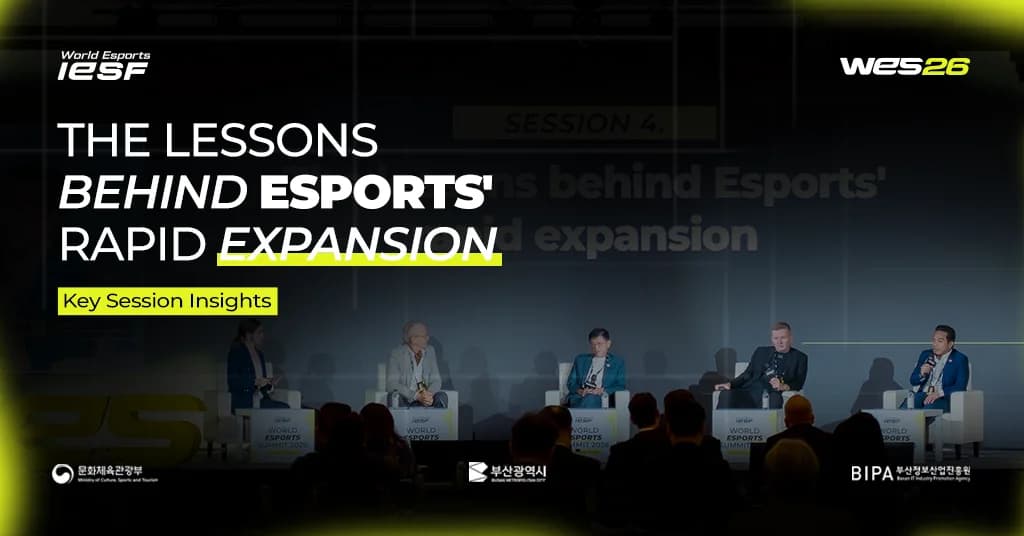
Esports has expanded rapidly across the world, but turning growing interest into a sustainable ecosystem requires more than players and competitions. During the session, esports leaders explored what regions can learn from their experiences and how the industry can build stronger foundations.
In Africa, the opportunity is particularly significant. According to the discussion, 60% of the continent’s population is under 25, highlighting the potential of a young generation already passionate about gaming. Yet participation alone cannot guarantee long-term development. Strong institutions, trained professionals, regular competitions and clear pathways for players are equally important.
From Events to Lasting Pathways
The panel highlighted the difference between hosting successful tournaments and building an ecosystem that can support players over time. While major events can demonstrate organisational capacity, sustainable growth depends on opportunities that allow players to progress from local competitions to national, continental and global stages.
The discussion also explored the challenge of governance in an industry shaped by both sport and business. Federations need to work closely with game publishers while strengthening regulations, funding, infrastructure and education.
Learning Across Borders
Regional cooperation emerged as another key lesson. The Southeast Asia Esports Federation brings together 11 countries, creating a shared platform for collaboration, knowledge exchange and collective representation.
In Europe, the discussion referenced a federation network with 44 members, while Malaysia’s national esports blueprint aims towards 2030, reflecting the importance of long-term planning and cooperation across government ministries.
However, successful approaches cannot simply be copied from one region to another. Each country has its own culture, resources and institutional structures.
Building for the Long Term
The panel’s message was clear: meaningful progress requires investment beyond individual events. School programmes, talent development, government support, professional opportunities and stronger institutions can help turn esports’ popularity into lasting progress.
The event should be the result of the ecosystem, not a substitute for it.
Ultimately, esports growth is not measured only by the size of a tournament or the number of participants, but by the opportunities and structures that remain long after the competition ends.
Watch the full panel HERE.